
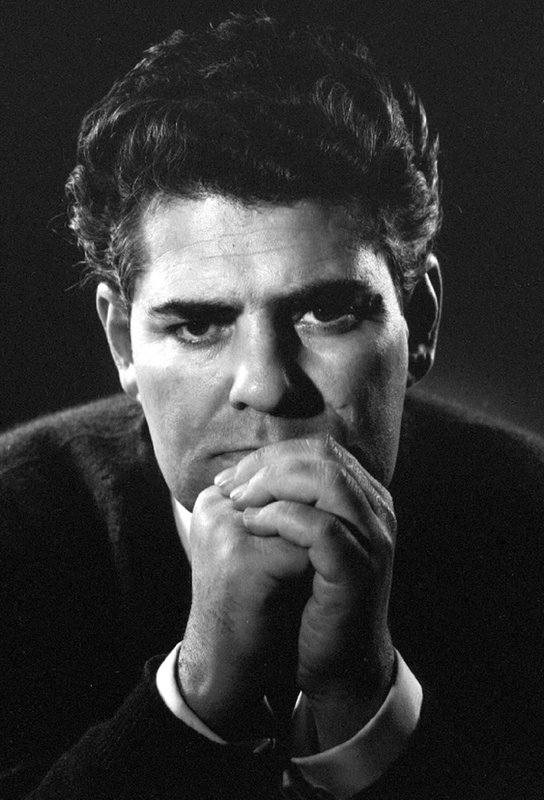
Ahmad Shamlou
Poet · Iranian · 1925 – 2000
Modern Persian Poetry
The Voice That Broke the Meter
He was born in Tehran in 1925, the son of a military officer, and he spent his childhood being dragged by his father's postings from one provincial city to another -- Khash, Mashhad, Shiraz, Rasht -- so that by the time he was a teenager Ahmad Shamlou knew Iran the way few Tehran-born intellectuals ever would: as a vast, poor, beautiful country whose peasants and shepherds and bazaar workers spoke a Persian that the university poets had forgotten.
He was imprisoned by the Allied occupiers in 1943, at eighteen, for his suspected sympathies with the German side during World War II. He was imprisoned again under the Shah in 1954 for his communist associations. He was harassed and censored all his life. And still, from inside that unceasing pressure, he produced the body of work that most educated Iranians now regard as the single greatest contribution to Persian poetry since Hafez -- which is to say, the single greatest contribution in six hundred years.
What he did was break the meter. Classical Persian poetry had been written for a thousand years in fixed metrical forms inherited from Arabic prosody: the ghazal, the qasida, the masnavi, the rubai. Those forms were the glory of the tradition and also, by the twentieth century, a kind of beautiful cage. Nima Yushij had begun to dismantle the cage in the 1920s and 30s with his experiments in free meter. Shamlou finished the job. He wrote poems in sweeping, cadenced Persian that obeyed no classical rule except the ancient obligation to tell the truth. He called it she'r-e sepid -- "white poetry" -- and it changed what Persian verse could sound like.
His subject, over and over again, was human dignity under political darkness. He wrote love poems to his wife Aida that are among the most tender in the language. He wrote elegies for friends murdered by the secret police. He wrote Abraham in the Fire, a long poem cycle that reimagines the prophets and martyrs of scripture as modern dissidents burning in the furnaces of twentieth-century tyranny. He wrote a poem called "In This Dead End" during the worst years of the revolution:
"They smell your mouth / lest you have said: I love you. / They smell your heart. / Such strange times are these, my dear."
Beyond the poems, he did something that may outlast even them: he spent the last two decades of his life compiling the Ketab-e Koucheh -- the Book of the Alley -- a vast encyclopedia of Iranian folk culture, proverbs, street slang, children's games, insults, lullabies, taboos, and working-class expressions, in twelve planned volumes. It was the salvage mission of a poet who understood that empires and governments come and go but that a people live in their idioms. He did not finish it. No one will.
He lived his last decade under a kind of house arrest in a small town north of Tehran, losing one leg and then the other to diabetes, dictating poems when he could no longer hold a pen. He died in 2000. His funeral procession in Tehran drew tens of thousands of mourners despite the refusal of the state broadcaster to announce his death. His grave, in Emamzadeh Taher cemetery in Karaj, is still a pilgrimage site. On the anniversary of his death, young people in Iran read his poems aloud to each other in parks and in private rooms, and for that one day at least, the meter that he broke is allowed to sing.
Such strange times are these, my dear -- they smell your mouth lest you have said: I love you.
Notable Works
- Fresh Air
- Aida in the Mirror
- Abraham in the Fire
- Phoenix in Rain