
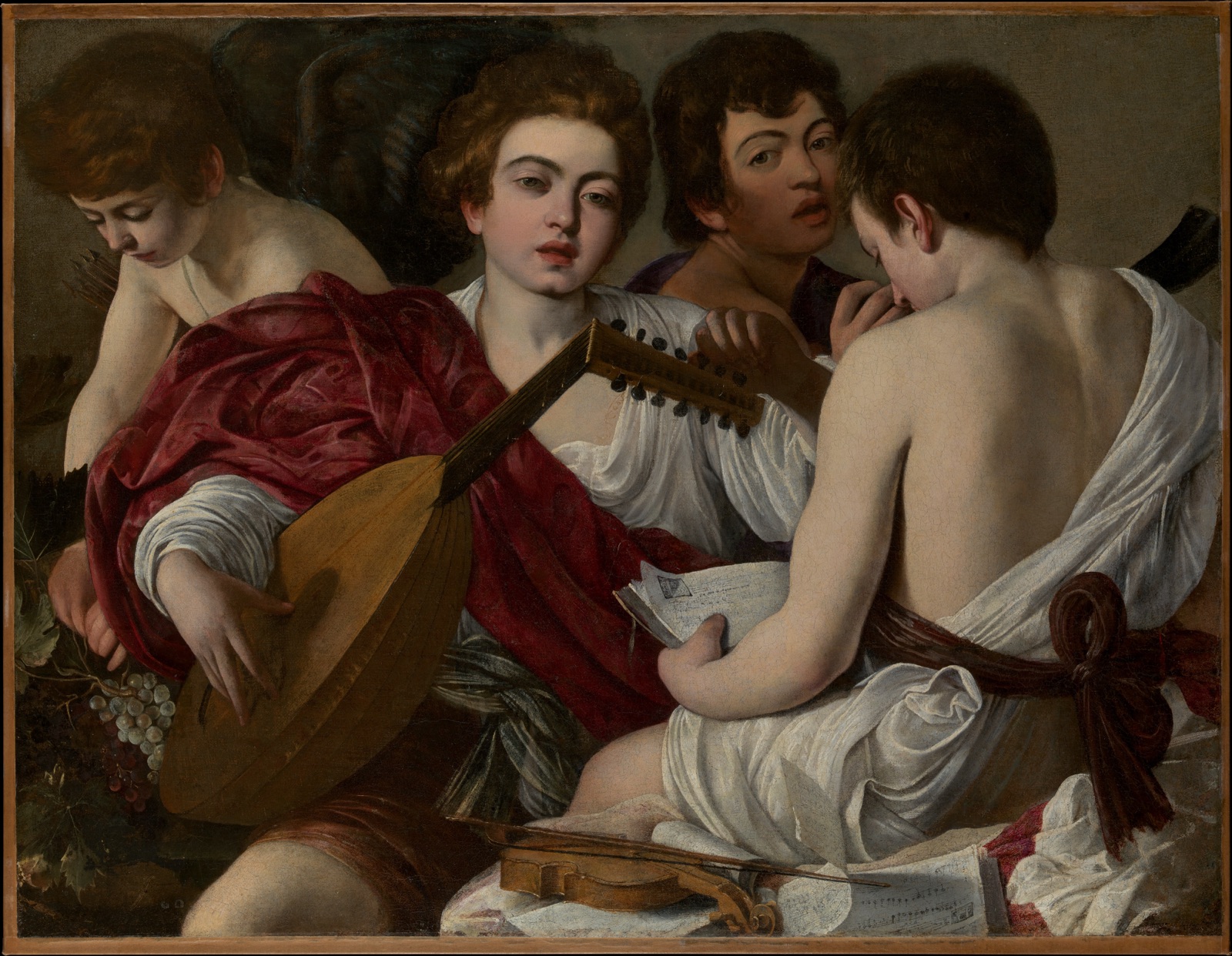
Caravaggio
Painter · Italian · 1571 – 1610
Baroque
The Killer Who Painted Saints
Michelangelo Merisi da Caravaggio was a murderer, a brawler, a fugitive, and the most revolutionary painter of the seventeenth century. His life reads like a crime novel set in the back alleys of Baroque Rome, and his art -- brutal, tender, lit by a darkness that is both physical and spiritual -- changed the course of European painting.
He arrived in Rome around 1592, young, penniless, and ferociously talented. He slept in doorways, worked as an assistant to other painters, and hustled for commissions. His early works -- Boy with a Basket of Fruit, the Sick Bacchus (a self-portrait painted during illness, green-skinned and hollow-eyed) -- announced a painter who refused the idealized beauty of the Renaissance. His figures were real people: street boys, prostitutes, laborers with dirty fingernails and sunburned skin.
Then came the Contarelli Chapel commission, and everything changed. The Calling of Saint Matthew, installed in the church of San Luigi dei Francesi in 1600, depicts the moment Christ points at a tax collector sitting in a dim Roman tavern. A shaft of light -- Caravaggio's signature device, borrowed from a cellar window -- cuts across the scene like a blade of grace. Matthew points at himself in disbelief: who, me? It is the most psychologically convincing depiction of vocation in Western art, and it made Caravaggio famous overnight.
He followed it with a series of masterpieces painted with terrifying speed and conviction: Judith sawing through the neck of Holofernes, her face a mixture of determination and revulsion; the Supper at Emmaus, where Christ's blessing hand reaches out of the canvas toward the viewer; the Crucifixion of Saint Peter, where the aging apostle is hoisted upside-down by workmen who look merely tired.
But Caravaggio's temper was as ferocious as his talent. He was arrested repeatedly for assault, property damage, and carrying weapons without a license. In May 1606, he killed a man named Ranuccio Tomassoni in a street fight -- possibly over a gambling debt, possibly over a woman -- and fled Rome with a price on his head.
The last four years of his life were spent in exile: Naples, Malta, Sicily, back to Naples, each stop producing paintings of increasing desperation and power. His late David with the Head of Goliath is a self-portrait: the severed head dangling from David's fist is Caravaggio's own face, bloated and dead-eyed, the killer painting himself as the killed.
He died on a beach in Porto Ercole in 1610, at thirty-eight, feverish and alone, still trying to get back to Rome. The pardon he had been promised arrived days too late.
A shaft of light cuts across the scene like a blade of grace, and Matthew points at himself in disbelief: who, me?
Notable Works
- Judith Beheading Holofernes
- The Calling of Saint Matthew
- David with the Head of Goliath
- Bacchus