
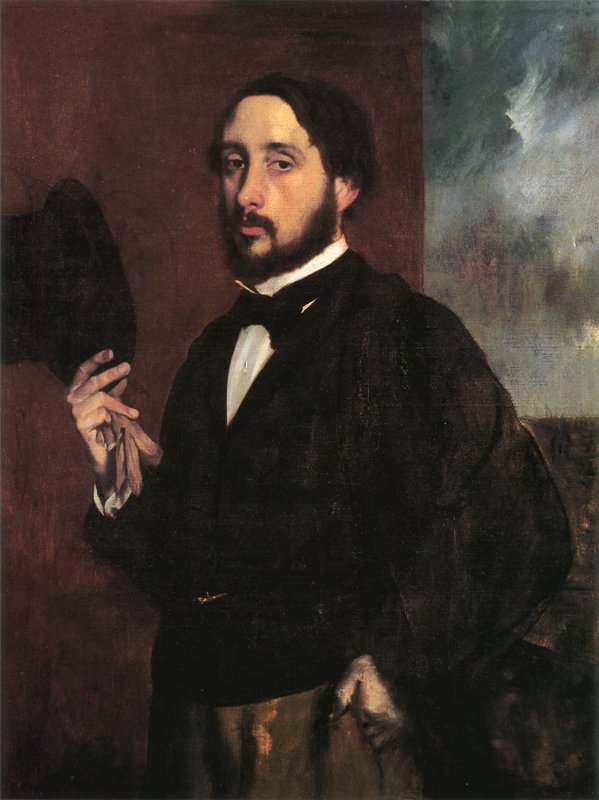
Edgar Degas
Painter · French · 1834 – 1917
Impressionism
The Observer Who Never Looked Away
He hated being called an Impressionist. Edgar Degas, the son of a wealthy Parisian banker, trained in the rigorous academic tradition of Ingres and preferred the controlled light of the studio to the fields and gardens his contemporaries worshipped. "No art was ever less spontaneous than mine," he once snapped. "What I do is the result of reflection and of the study of the great masters." And yet he exhibited alongside Monet, Renoir, and Pissarro in seven of the eight Impressionist exhibitions, and his work -- obsessive, sharp-eyed, structurally ruthless -- remains inseparable from that revolution.
His subjects were the modern city as seen from an unflinching distance: laundresses ironing until their backs ached, milliners bent over hats, absinthe drinkers slumped in cafes, jockeys tight in the saddle, and above all, the ballet. He painted and drew and sculpted dancers for forty years -- not the glamorous stars under the gaslight but the exhausted students rehearsing in cold studios, tying their slippers, scratching their shoulder blades, waiting in the wings with their mothers watching from the edge of the room. He was not interested in beauty for its own sake. He was interested in the specific posture of a girl who has been on her feet for six hours.
He never married. He lived most of his life in austere apartments full of books and prints. He was gruff, difficult, famously anti-Dreyfusard, and alienated many of his closest friends with his temper and his politics. But his eye -- his terrible, tender, patient eye -- missed nothing.
In 1881 he exhibited Little Dancer of Fourteen Years, a wax sculpture dressed in a real tulle tutu and a silk hair ribbon. The critics called it hideous, monstrous, a threat to civilization. He put her away and never showed another sculpture in public. After his death, they found more than a hundred wax figures in his studio, models he had made only for himself, studies in the physics of human balance.
In his last decades he went nearly blind, and yet he kept working -- in pastel, in charcoal, in monotype -- leaning closer and closer to the paper, trusting his hand when his eyes could no longer help. He produced some of his most radiant work in that darkness: women stepping out of baths, toweling themselves, combing their hair, lost in the private rituals of their own bodies, unaware of the watcher. "They think me heartless," he said near the end, "but I have loved only what I could not say."
Art is not what you see, but what you make others see.
Notable Works
- The Dance Class
- L'Absinthe
- Little Dancer of Fourteen Years
- The Tub