
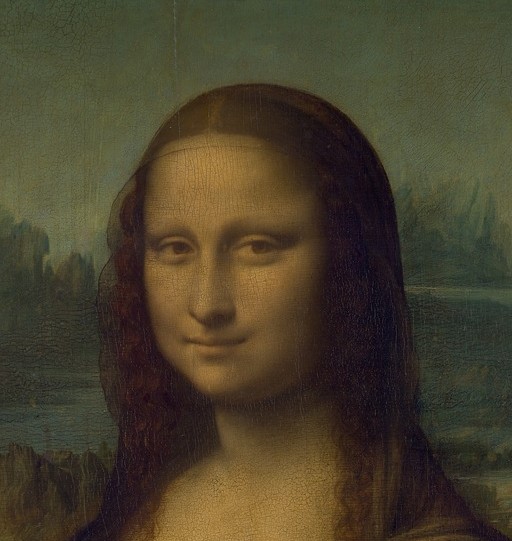
Leonardo da Vinci
Painter · Italian · 1452 – 1519
Renaissance
The Mind That Could Not Rest
He was born illegitimate in a Tuscan hill town, the son of a notary and a peasant woman whose name we barely know. That fact alone -- the stain of bastardy in fifteenth-century Italy -- barred Leonardo da Vinci from university, from the legal profession his father practiced, and from most of the respectable corridors of Florentine society. It may have been the greatest gift the world ever received.
Because Leonardo, unshackled from convention, became the most restlessly curious human being who ever lived. He dissected cadavers by candlelight to understand the architecture of the human hand. He filled notebook after notebook -- over seven thousand pages survive -- with sketches of flying machines, hydraulic pumps, anatomical studies, and observations on the way light falls through moving water. He wrote backwards, in mirror script, left-handed, as though even his handwriting had to move against the current.
As a painter, he invented sfumato, the technique of layering gossamer-thin glazes of oil paint until edges dissolve into atmosphere. The Mona Lisa, that small portrait on a poplar panel, took him years -- he carried it with him from Florence to Rome to France, never quite finished, always adding another translucent veil. Her smile is not painted; it is breathed onto the wood.
The Last Supper, painted on a refectory wall in Milan, was revolutionary: twelve men reacting in a single frozen instant to the words "one of you will betray me." Leonardo choreographed shock, denial, grief, and guilt along a table with the precision of a dramatist and the eye of a physicist. He understood that emotion moves through a group the way a stone's impact ripples through water.
Yet for all his genius, Leonardo was a man of spectacular incompletion. He abandoned commissions, left sculptures uncast, let paintings decay through experimental techniques that failed. His patrons raged. His rivals mocked him. Michelangelo reportedly sneered at him in the street.
He spent his final years in a small manor house in Amboise, France, given to him by a young king who simply wanted to be near that mind. Leonardo died there in 1519, at sixty-seven, leaving behind not a body of finished masterpieces but something rarer: proof that a single human consciousness, sufficiently awake, can touch every edge of the knowable world. His notebooks remain the most intimate record we have of what it means to look at everything and want to understand it all.
Her smile is not painted; it is breathed onto the wood.
Notable Works
- Mona Lisa
- The Last Supper
- Vitruvian Man