
Matsuo Basho
Poet · Japanese · 1644 – 1694
Haiku
The Narrow Road to Everything
In the spring of 1689, Matsuo Basho sold his house, gave away most of his possessions, and set out on foot into the interior of Japan. He was forty-five years old, in uncertain health, and he expected to die on the road. "Do not seek to follow in the footsteps of the wise," he had written. "Seek what they sought." What they sought, he believed, was not comfort or permanence but the direct encounter with reality that only displacement -- only the road -- can provide.
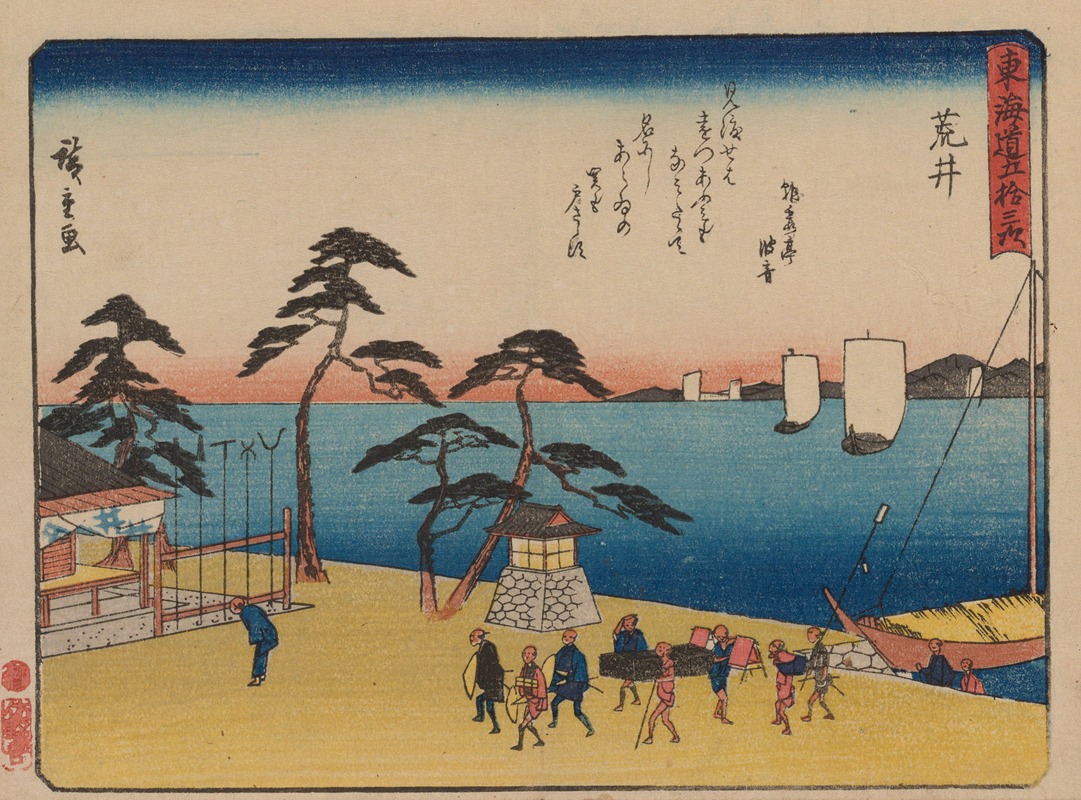
The journey lasted five months and covered 1,500 miles on foot and by horseback. It produced The Narrow Road to the Deep North, a slender masterpiece that interweaves prose and haiku into a record of travel, memory, and the transience of all things. It is the foundational text of haiku literature, and one of the most influential travel narratives ever written.
Basho had not always been a wanderer. Born Matsuo Kinsaku in Ueno, in Iga Province, he served as a companion to the young son of a local lord, with whom he studied poetry. When his master died -- Basho was twenty-two -- he drifted to Kyoto, then to Edo (Tokyo), where he established himself as a teacher of haikai, the collaborative linked-verse form from which haiku would eventually emerge.
His early poetry was clever, witty, and fashionable. Then something shifted. Around 1680, he moved to a small hut on the outskirts of Edo, near a banana tree (basho) that his students planted for him and from which he took his pen name. He began studying Zen with the priest Butcho, and his poetry deepened from cleverness into something harder to name -- a quality the Japanese call wabi-sabi, the beauty of impermanence, loneliness, and incompleteness.
The famous frog poem dates from 1686: "The old pond -- / a frog jumps in -- / the sound of water." In seventeen syllables, Basho captured the moment when attention becomes so complete that the distinction between observer and observed dissolves. The poem is not about a frog. It is about the quality of attention that allows a frog to become the entire universe for the duration of a splash.
Basho made several journeys, each recorded in poetic travel diaries that map not geography but consciousness. He was searching for what he called "the unchanging" within the ever-changing -- the eternal present tense that exists inside every moment of perception.
He died in Osaka in 1694, among his students, still traveling. His death poem was itself about the road: "Falling sick on a journey / my dreams go wandering / over withered fields." Even dying, he was still walking, still looking, still finding in the humblest image -- a withered field, a splash of water -- the sound of everything.
The poem is not about a frog; it is about the quality of attention that allows a frog to become the entire universe for the duration of a splash.
Notable Works
- The Narrow Road to the Deep North
- Old Pond
- The Records of a Weather-Exposed Skeleton