
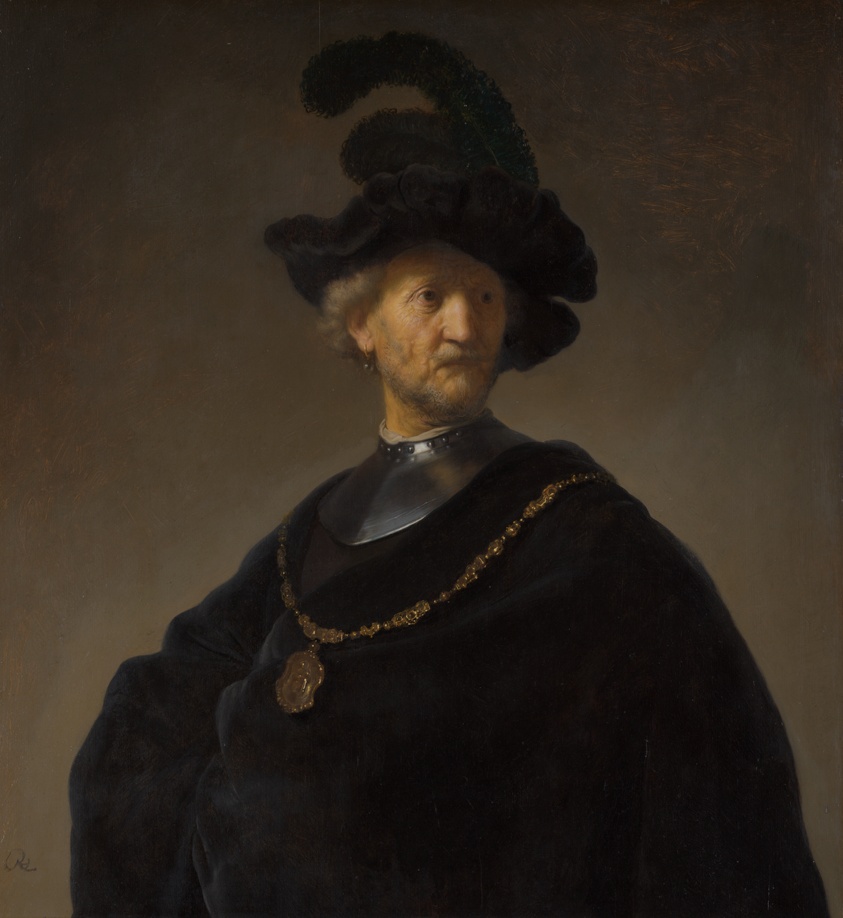
Rembrandt van Rijn
Painter · Dutch · 1606 – 1669
Baroque / Dutch Golden Age
The Face in the Mirror, Aging
No artist ever scrutinized himself as relentlessly as Rembrandt van Rijn. Over four decades, he painted, etched, and drew nearly a hundred self-portraits -- more than any major artist before or since. The early ones show a young man playing dress-up: velvet berets, gold chains, theatrical expressions borrowed from the actors he sketched in Amsterdam's theaters. The late ones show something far more unsettling: an old man looking at the ruin of his own face with a tenderness that amounts to forgiveness.
He was born in Leiden in 1606, the son of a miller. By his mid-twenties he was the most sought-after painter in Amsterdam, commanding enormous fees for portraits that brought his sitters to life with a psychological depth no Dutch painter had achieved. The Anatomy Lesson of Dr. Nicolaes Tulp, painted when Rembrandt was just twenty-six, turned a routine group portrait into a drama of mortality and curiosity: seven surgeons gathered around a cadaver, each face registering a different shade of fascination and unease.
Success brought wealth, a grand house on the Sint Anthonisbreestraat, a cabinet of curiosities filled with shells, weapons, antique busts, and Japanese paper. It also brought Saskia van Uylenburgh, his wife, whom he painted with frank adoration -- as Flora, as herself, as a bride glowing with happiness. She died in 1642, at twenty-nine, leaving him with an infant son, Titus.
What followed was a long, slow catastrophe. Rembrandt spent extravagantly and earned less as his style grew darker, rougher, and more unfashionable. He took a common-law wife, Hendrickje Stoffels, who was censured by the church for living in sin with him. He declared insolvency in 1656 and lost the grand house, the collection, nearly everything.
But the paintings grew deeper. The Night Watch, already completed in 1642, had shown his ambition to transcend mere portraiture. Now, stripped of prosperity, he painted The Jewish Bride, in which a man's hand rests on a woman's chest with a gentleness so intimate that Van Gogh, standing before it two centuries later, said he would give ten years of his life to sit before it for a fortnight.
His final masterpiece, The Return of the Prodigal Son, painted in the last year of his life, shows a ragged young man kneeling before his blind father, whose hands rest on his son's back with infinite care. It is a painting about forgiveness that feels earned rather than preached, because the man who painted it had lost everything and understood, at last, what it means to come home with nothing.
Rembrandt died in 1669, poor and nearly forgotten. He was buried in an unmarked grave. The grave is gone, but the self-portraits remain: a record of one human face, changing, aging, never looking away.
The late self-portraits show an old man looking at the ruin of his own face with a tenderness that amounts to forgiveness.
Notable Works
- The Night Watch
- The Return of the Prodigal Son
- Self-Portrait with Two Circles
- The Anatomy Lesson of Dr. Nicolaes Tulp